
DHEA-S: What This Hormone Can Tell You About Your Health
DHEA-S is a hormone produced mainly by the adrenal glands and plays a role in overall hormonal health. Levels naturally decline with age, while unusually high or low values may provide useful clues about adrenal and endocrine function. At LiveLong, DHEA-S is assessed alongside other biomarkers to provide a broader view of your hormonal health.
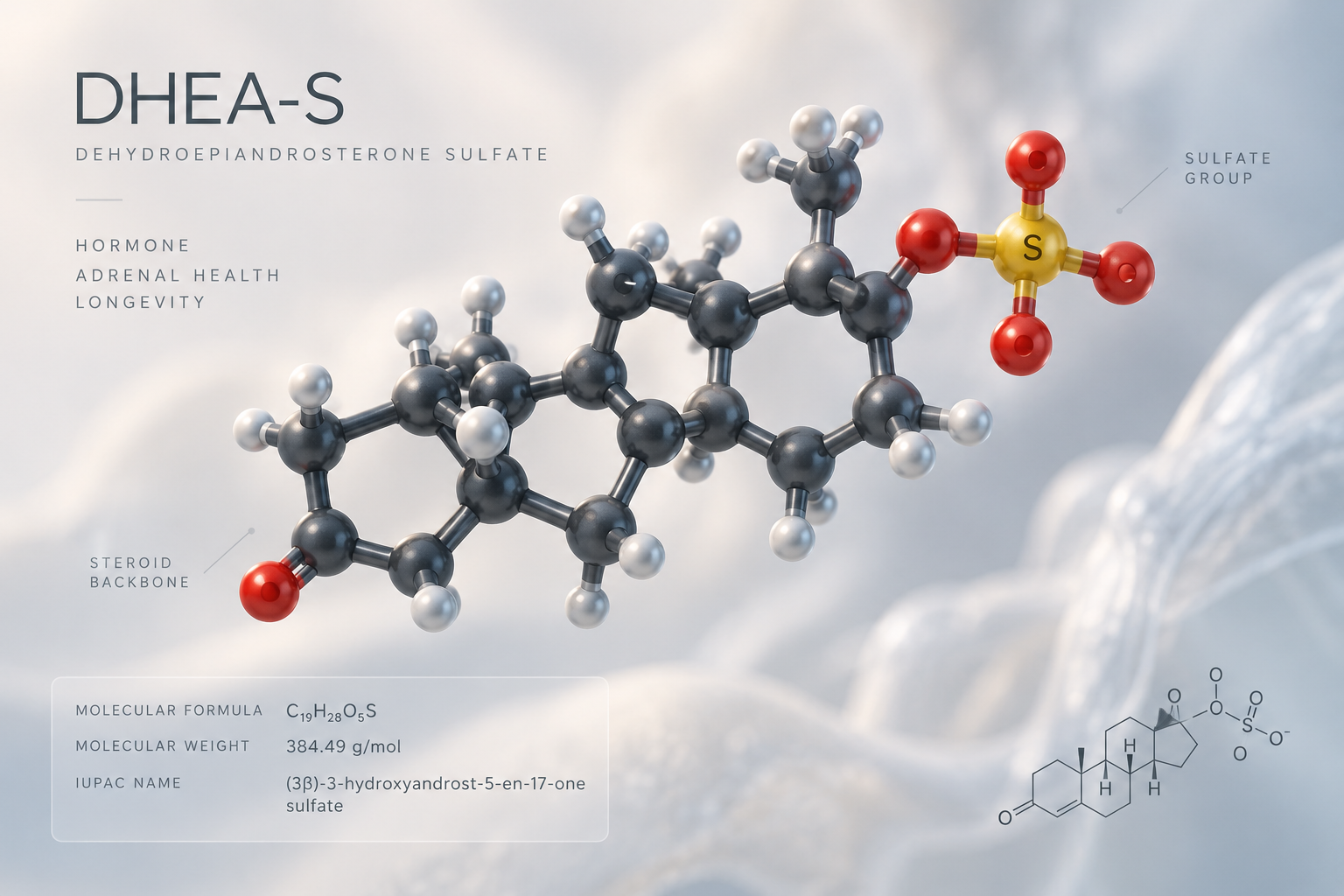
When people think about blood tests, they often focus on cholesterol, blood sugar, or vitamin levels. However, some of the most valuable insights into your health come from hormones that receive far less attention. One of these is DHEA-S (dehydroepiandrosterone sulfate).
Although DHEA-S is not a routine screening test for everyone, it can provide important information about your hormonal balance, stress response, healthy aging, and adrenal gland function. Understanding your DHEA-S level may help identify imbalances long before they lead to noticeable symptoms.
What is DHEA-S?
DHEA-S is a hormone produced primarily by your adrenal glands, which are small glands located on top of your kidneys. These glands produce several important hormones that regulate metabolism, blood pressure, immune function, and your response to stress.
DHEA-S serves as a precursor hormone, meaning it is converted into other hormones, including testosterone and oestrogen. Both men and women produce DHEA-S, although the amount gradually declines with age.
Unlike many hormones that fluctuate throughout the day, DHEA-S levels remain relatively stable. This makes it a reliable marker that can be measured with a single blood sample.
Why is DHEA-S important?
DHEA-S plays a role in many physiological processes, including:
- Production of sex hormones
- Maintenance of muscle mass and bone strength
- Immune system regulation
- Energy metabolism
- Mood and cognitive function
- Healthy aging
Research suggests that maintaining appropriate DHEA-S levels is associated with better physical function and overall health. However, more is not always better. Both unusually low and unusually high levels can signal underlying health issues.
DHEA-S and aging
One of the most interesting aspects of DHEA-S is its relationship with aging.
Levels are highest during your twenties and gradually decline over the following decades. By the age of 70–80 years, DHEA-S concentrations may be only 10–20% of their peak values.
This decline is considered a normal part of aging. Nevertheless, unusually low levels for your age may contribute to symptoms such as:
- Fatigue
- Reduced physical performance
- Lower libido
- Decreased muscle strength
- Reduced resilience to stress
- Lower sense of well-being
Importantly, these symptoms are non-specific and may have many different causes. DHEA-S should therefore always be interpreted alongside other blood markers and your clinical picture.
What can a low DHEA-S level indicate?
A lower-than-expected DHEA-S level may be associated with:
Adrenal insufficiency
When the adrenal glands do not produce enough hormones, DHEA-S is often one of the first hormones to decrease.
Chronic illness
Several chronic medical conditions may suppress adrenal hormone production.
Long-term corticosteroid use
Medications such as prednisone can reduce DHEA-S production.
Chronic stress or prolonged physiological strain
Long-lasting physical or psychological stress may influence adrenal function. While DHEA-S alone cannot diagnose stress, it can contribute to the overall assessment.
Normal aging
The most common reason for declining DHEA-S remains increasing age.
What can a high DHEA-S level indicate?
Elevated DHEA-S levels are less common but may indicate increased adrenal hormone production.
Possible causes include:
- Polycystic ovary syndrome (PCOS)
- Congenital adrenal hyperplasia
- Certain adrenal tumors (rare)
- DHEA supplementation
- Some medications
High DHEA-S levels may contribute to symptoms such as acne, excessive hair growth, irregular menstrual cycles, or hair thinning in women.
Why measure DHEA-S in preventive blood testing via LiveLong?
Preventive blood testing aims to identify potential health issues before disease develops or symptoms become severe.
DHEA-S can contribute valuable information because it reflects adrenal hormone production and overall endocrine health. While it is not a stand-alone diagnostic test, it becomes much more informative when combined with other markers.
For example, DHEA-S is often interpreted together with:
- Cortisol
- Testosterone
- Oestradiol
- Thyroid hormones
- Vitamin D
- Glucose and insulin markers
- Inflammatory markers
Looking at multiple biomarkers together provides a much more complete picture of your health than relying on a single value. The DHEA-S biomarker test is part of the Personal Package and is interpreted together with the markers mentioned above.
Can lifestyle influence DHEA-S?
Several lifestyle factors may influence DHEA-S levels over time.
Healthy habits that support overall hormonal health include:
- Regular physical activity
- Adequate sleep
- Maintaining a healthy body weight
- Managing chronic stress
- Eating a balanced, nutrient-rich diet
- Avoiding smoking
- Limiting excessive alcohol consumption
While no specific lifestyle intervention is guaranteed to increase DHEA-S, these habits support healthy adrenal function and overall well-being.
Should everyone take DHEA supplements?
Although DHEA supplements are marketed as anti-aging products, scientific evidence remains mixed. Supplementation may be appropriate in specific medical conditions under professional supervision, but LiveLong does not recommend the usage without proper evaluation.
Because DHEA is converted into sex hormones, supplementation may alter hormone balance and can have unwanted side effects. Measuring your baseline level before considering supplementation is therefore advisable.
The bigger picture
A single blood marker rarely tells the whole story.
DHEA-S should be viewed as one piece of a larger puzzle. When interpreted together with other laboratory values, your symptoms, age, sex, lifestyle, and medical history, it can provide meaningful insights into your hormonal health and adrenal function.
Preventive blood testing is not about finding disease, but about understanding how your body is functioning today. DHEA-S is one of the markers that can help you gain that deeper understanding, allowing you and your healthcare professional to make informed decisions about your long-term health.
Key takeaways
- DHEA-S is a stable hormone produced mainly by the adrenal glands.
- It serves as a precursor for testosterone and estrogen.
- Levels naturally decline with age but can also be influenced by medical conditions and medications.
- Low or high DHEA-S levels may provide important clues about adrenal and hormonal health.
- DHEA-S is most valuable when interpreted alongside other blood markers rather than on its own. At LiveLong, this blood marker is part of the Personal Package, and is evaluated together with multiple other markers to give full insight on your overall endocrine health status.
- Preventive blood testing can help identify hormonal imbalances early and support informed lifestyle and healthcare decisions.